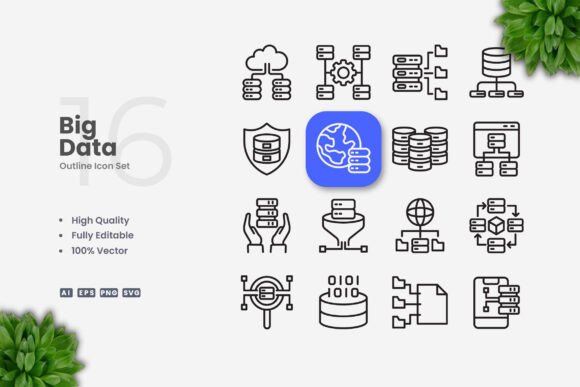
Big Data Icons: Modern Graphics for Clean Visual Storytelling
First Impressions: A Fresh Take on Icon Design
When I first encountered Big Data Icons, it immediately struck me as a graphic design asset that bridges the gap between simplicity and functionality. The clean, minimalist style of these icons feels modern and adaptable—perfect for content creators who need to maintain a cohesive visual identity across multiple platforms.
The editorial mood they create is professional yet approachable, making them ideal for educational content, tech blogs, and data-driven marketing materials. They carry a subtle sense of authority without being overly formal, which makes them suitable for niches ranging from digital marketing to online education.
This set of icons feels particularly at home in content that needs to be both informative and visually engaging. Their simple forms make them versatile enough to support lifestyle-focused content while still maintaining an air of professionalism that’s essential for content marketing and affiliate marketing efforts.
Real Publishing Workflow: Where Big Data Icons Shine
As a blog designer and digital publisher, I often look for design assets that can seamlessly integrate into various publishing formats. Big Data Icons are no exception. Whether you're preparing Pinterest pins, article headers, or downloadable resources, these icons provide a consistent visual language that enhances readability and brand recognition.
Here are some real-world applications where Big Data Icons can elevate your editorial design:
- Blog Featured Images: Use them as accents in featured images to highlight key topics or sections of your content.
- Pinterest Graphics: Pair them with catchy headlines to create clickable, shareable pins that stand out in a crowded feed.
- Newsletter Headers: Incorporate them into newsletter headers to break up text and guide readers through your content more effectively.
- Downloadable Resources: Add them to worksheets, digital guides, or eBook covers to improve visual hierarchy and make your content more appealing.
- Social Media Previews: Use them in social media graphics to reinforce your brand identity and make your posts more visually compelling.
These icons also work well within Canva templates or other graphic design tools, allowing you to customize colors, stroke weights, and sizes to match your specific branding needs.
Design Performance: How These Icons Boost Content Engagement
Visual elements like Big Data Icons play a crucial role in how readers perceive your content. They help establish a stronger first impression, which is especially important for websites and blogs competing for attention in today's digital landscape.
By using these icons strategically, you can achieve clearer visual hierarchy, making it easier for readers to scan and understand your content. This is particularly valuable for digital product pages, lead magnets, and content upgrades where quick comprehension is key.
Additionally, their consistent design contributes to better brand recognition and improved reader trust. When your website or blog features a unified visual identity, visitors are more likely to perceive your content as professional and credible.
Best Practices for Using Big Data Icons in Web Design
While Big Data Icons are incredibly versatile, there are certain contexts where they perform best. Here are a few areas where they naturally shine:
- Hero Images: Use them in hero sections to introduce key themes or services.
- Article Thumbnails: Enhance thumbnails with these icons to increase click-through rates.
- Pinterest Pins: Create eye-catching visuals by combining them with short, punchy text.
- Editorial Accents: Use them as decorative elements within articles to break up large blocks of text.
- Category Visuals: Help readers navigate your site by using icons to represent different content categories.
However, there are also situations where caution is needed. For example, avoid using these icons in small mobile thumbnails where they might lose clarity. Similarly, they may not be the best fit for serious corporate content or websites that require a very minimal visual system.
Practical Publisher Notes: Tips for Getting the Most Out of Big Data Icons
Before integrating Big Data Icons into your content workflow, consider the following practical steps:
- Test Across Devices: Ensure they look good on both desktop and mobile screens.
- Check Thumbnail Compatibility: Preview how they appear when used as thumbnails in blog feeds or social media.
- Review in Context: Place them inside a real blog layout to see how they interact with surrounding text and design elements.
- Contrast and Readability: Test them with different fonts—serif, sans serif, script, handwritten, and display—to ensure they remain legible.
- Optimize for Web Performance: Compress image files to ensure fast loading times without sacrificing quality.
- Confirm Licensing: Always verify commercial licensing before using them on monetized sites, affiliate pages, or paid digital downloads.
By taking these steps, you’ll ensure that Big Data Icons enhance your content rather than distract from it.
Final Thoughts: Elevating Your Digital Presence with Big Data Icons
Big Data Icons offer a powerful way to inject visual clarity and modernity into your content. Whether you're working on web design, editorial layouts, or digital marketing campaigns, these icons provide a flexible tool that supports both creativity and consistency.
For bloggers, publishers, and digital marketers looking to elevate their content presentation, this graphic design asset is definitely worth exploring. With thoughtful integration, Big Data Icons can help transform your content into something that feels polished, professional, and visually engaging—exactly what your audience expects in today's competitive digital space.